
Energy Rescue: Formula Design Philosophy and Ingredient Breakdown
Why we made this product: each of these ingredients has its role, but no product had been formulated around multi-layered protection during alcohol metabolism.
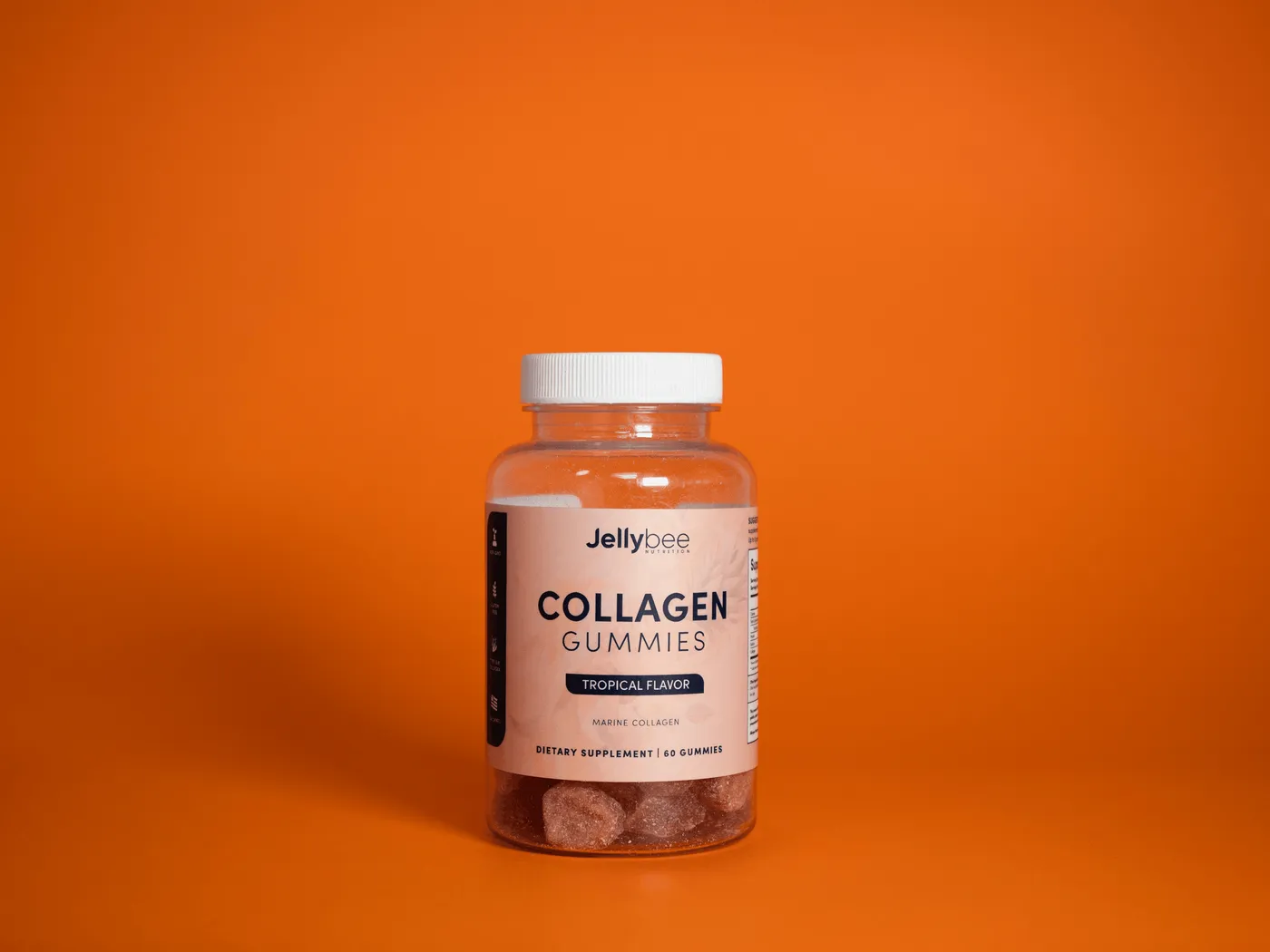
Walk into the supplement aisle of a drugstore and you'll see the numbers on collagen packaging getting bigger and bigger: 5,000mg, 8,000mg, 10,000mg, and even higher. But behind this numbers race lies a premise that rarely gets spelled out: the collagen you swallow does not enter your skin as whole molecules.
Dose is only the starting point. What determines how much collagen raw material finally reaches the dermis is molecular weight.
Intact, native collagen has a molecular weight of more than 300,000 Da (daltons). That is far too large for the digestive system, and the gut cannot absorb it directly. The body first has to break it down into smaller peptides and amino acids before they can pass through the intestinal wall into the bloodstream.
"Hydrolyzed collagen" simply means that this breakdown step has already been carried out during manufacturing, turning collagen molecules into smaller peptide fragments to improve absorption. The problem is that the degree of hydrolysis varies widely: collagen peptides on the market range anywhere from 1,000 Da to 10,000 Da in molecular weight, and their absorption efficiency varies just as widely.
The main route by which the gut absorbs peptides is a transporter protein called PEPT-1. It preferentially absorbs dipeptides and tripeptides, the small fragments made up of 2 to 3 amino acids, which correspond to a molecular weight of roughly 1,000 Da or less.
Research shows that when small collagen peptides under 1,000 Da are absorbed via PEPT-1, blood levels of hydroxyproline (Hyp), the marker that reflects how much collagen has been absorbed, rise significantly. After absorption they can remain in the blood for up to 14 days, continuously supplying raw materials to the fibroblasts in the dermis. Larger peptides (5,000–10,000 Da) can still be partly absorbed, but much less efficiently, so higher doses are needed to make up the difference.
That is why ordinary hydrolyzed collagen products on the market routinely advertise 8,000mg or 10,000mg. It isn't because the body needs that much; it's because only a small share of large-molecule peptides is actually absorbed, so quantity has to make up for a shortfall in quality.

Sources: Proksch et al. (2014); PMC12661388 (2025); Titagen® LMW review (2025)
BHN (Body Restoration Collagen) is a specialist fish collagen supplier based in Tokyo, Japan. It uses enzymatic hydrolysis to keep its fish collagen peptides below 1,000 Da, and it holds a Taiwanese skin-beauty patent (Invention Patent No. 436774, valid until 2032) as well as two Japanese patents, one for skin beauty and one for absorption enhancement.
This molecular-weight specification is backed by clinical research. Multiple randomized, double-blind trials have confirmed that a daily intake of 2.5g to 5g of low-molecular-weight fish collagen peptides significantly improves skin elasticity and hydration after 8 weeks, and that the effects can last for several weeks after supplementation stops, reflecting the longer time small peptides remain in the blood.
The BHN fish collagen dose in AURA Collagen Peptide Powder is set at 3,000mg, within the 2.5g–5g range that clinical trials have confirmed as effective. The figure wasn't picked at random: it corresponds to the minimum effective dose in existing study designs, ensuring efficacy while avoiding the digestive burden of an unnecessarily high dose.
In recent years, some products on the Taiwanese market have advertised molecular weights as low as 500Da or 600Da, implying that "smaller = better absorbed." The argument has a certain logic, but it overlooks an important biochemical problem: collagen peptides that are too small may no longer be "peptides" at all, but something closer to individual amino acids.
The scientific literature draws a clear line here. Collagen hydrolysates below 500Da are generally classified as the "amino acid type," because they have lost the intact sequences of dipeptides (such as Pro-Hyp) and tripeptides (such as Gly-Pro-Hyp). Yet Pro-Hyp and Gly-Pro-Hyp are precisely the bioactive peptides that have been studied most thoroughly and confirmed to directly stimulate fibroblast proliferation and inhibit MMP activity after absorption.
A cross-source study of peptide bioavailability available on PMC (Frontiers in Nutrition, 2024) used a randomized, double-blind crossover design to compare post-absorption blood levels of Pro-Hyp and Hyp-Gly from collagen hydrolysates of different molecular weights and sources. It confirmed that the key to effective absorption and fibroblast activation lies in keeping these specific dipeptide and tripeptide sequences intact, not simply in chasing a lower molecular-weight number. Over-hydrolysis breaks these peptide sequences apart, and the bioactivity is lost as a result.
In other words, molecular weight has an effective lower limit. A degree of hydrolysis of around 1,000 Da is a design range that strikes a balance between "efficient absorption via PEPT-1" and "preserving the key bioactive peptide sequences." This is also where Japanese patented fish collagen suppliers have focused their R&D for years, rather than pushing molecular weight ever lower.
Even among low-molecular-weight collagen peptides, the source also affects absorption efficiency. Research shows that fish (marine) collagen differs from mammalian (bovine and porcine) collagen in the following ways:
The triple-helix structure of fish collagen is less stable at room temperature, so it more readily forms uniform small peptides when hydrolyzed, which helps PEPT-1 recognize and absorb them. Some studies indicate that fish collagen peptides are absorbed more efficiently overall than bovine collagen of the same molecular weight. Fish collagen also raises no religious dietary concerns, and its allergy risk is lower than that of bovine or porcine collagen.
BHN uses deep-sea fish as its raw material and an enzymatic hydrolysis process to precisely control molecular weight within the range where absorption is most efficient, while preserving the amino acids characteristic of collagen (glycine, proline and hydroxyproline).
1. Proksch E, et al. (2014). Oral supplementation of specific collagen peptides has beneficial effects on human skin physiology: a double-blind, placebo-controlled study. Skin Pharmacol Physiol, 27(1):47–55. PMID: 23949208.
2. PMC12661388 (2025). The Sustained Effects of Bioactive Collagen Peptides on Skin Health: A Randomized, Double-Blind, Placebo-Controlled Clinical Study. PMC.
3. Kleinnijenhuis AJ, et al. (2024). Absorption of bioactive peptides following collagen hydrolysate intake: a randomized, double-blind crossover study in healthy individuals. Frontiers in Nutrition. PMC11325589.
4. Sato K, et al. (2020). Collagen-Derived Di-Peptide, Prolylhydroxyproline (Pro-Hyp): A New Low Molecular Weight Growth-Initiating Factor for Specific Fibroblasts Associated With Wound Healing. Front Cell Dev Biol. PMC7728856.
5. Lee HJ, et al. (2019). Orally administered collagen peptide protects against UVB-induced skin aging through the absorption of dipeptide forms, Gly-Pro and Pro-Hyp. Biosci Biotechnol Biochem, 83:1146–1156.
This article was compiled and reviewed by the PQ Labs research team. It is intended for health education only and makes no medical efficacy claims.
This article is general health information and is not a substitute for advice from a doctor or pharmacist. If you have a medical condition or take medication, please consult a healthcare professional first.

Why we made this product: each of these ingredients has its role, but no product had been formulated around multi-layered protection during alcohol metabolism.

Collagen brands keep racing to bigger doses, but few ask what actually happens to collagen inside the body. That question is where the AURA formula began.

Eggshell membrane (ESM), the thin film inside an eggshell, naturally combines collagen, elastin and hyaluronic acid. How it works, and why AURA uses it.